🚀
StreamingClaw
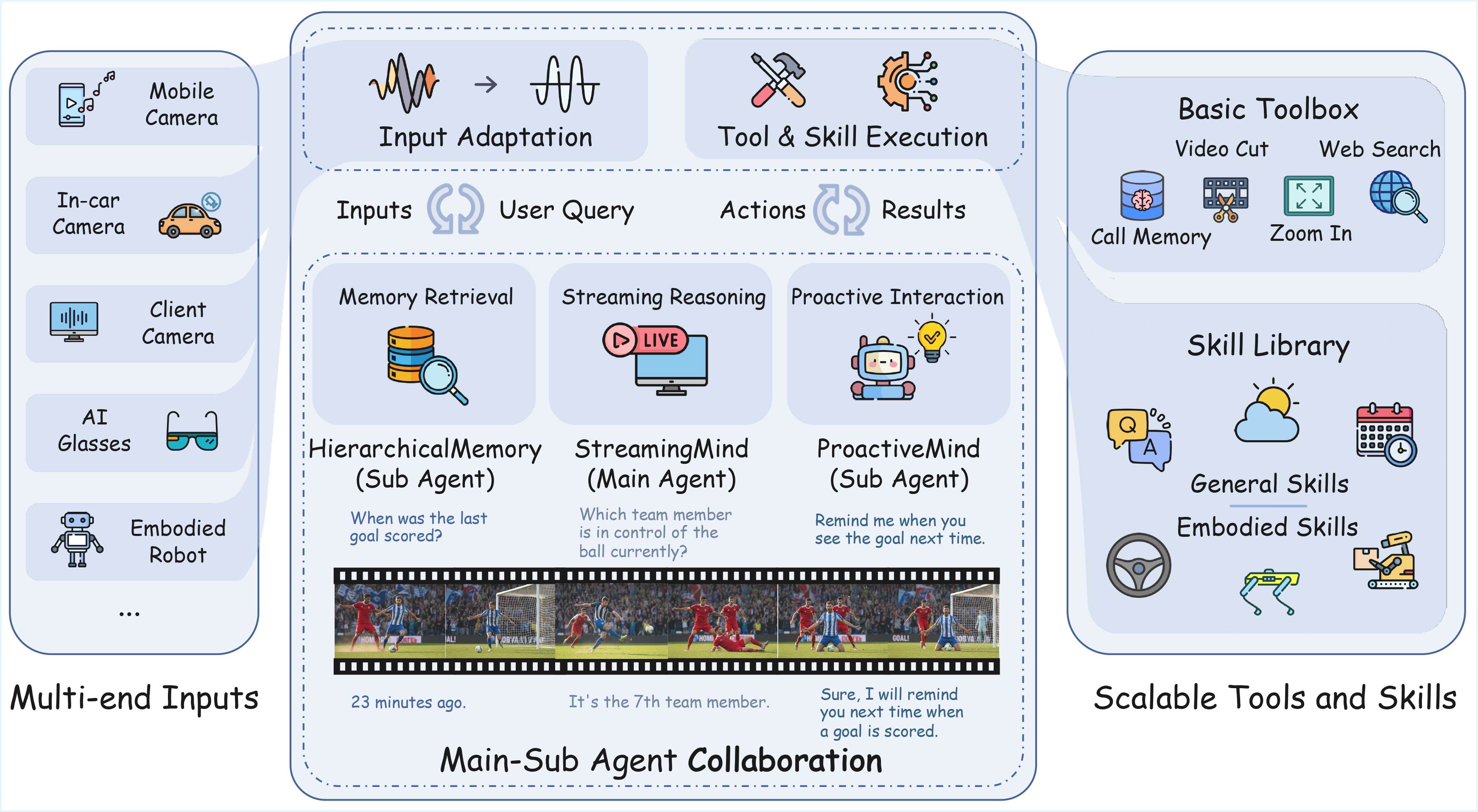
Pipeline of StreamingClaw: Multi-end inputs and the user query are fed into the main–sub agents for perception and decision-making. The instructions produced by the main–sub agents then guide the execution of tools and skills, whose results are fed back to the main–sub agents, forming a closed-loop pipeline of perception–decision–action.
Abstract
Emerging applications such as embodied intelligence, AI hardware, autonomous driving, and intelligent cockpits rely on a real-time perception-decision-action closed loop, posing stringent challenges for streaming video understanding. However, current agents mostly suffer from fragmented capabilities, such as supporting only offline video understanding, lacking long-term multimodal memory mechanisms, or struggling to achieve real-time reasoning and proactive interaction under streaming input. These shortcomings have become a key bottleneck for preventing agents from sustaining perception, making real-time decisions, and executing closed-loop actions in complex real-world environments, constraining their deployment and potential in dynamic, open physical worlds.
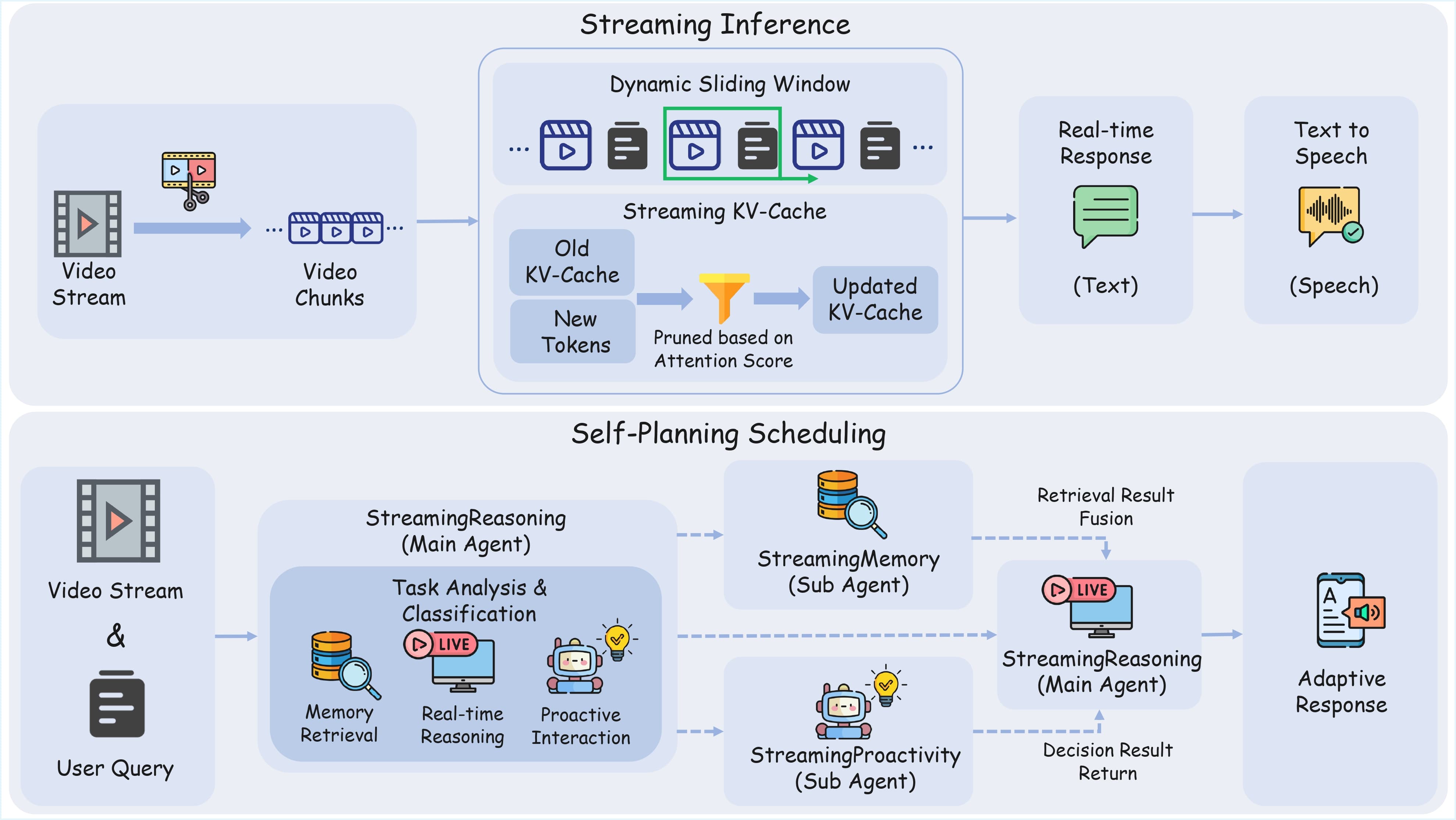
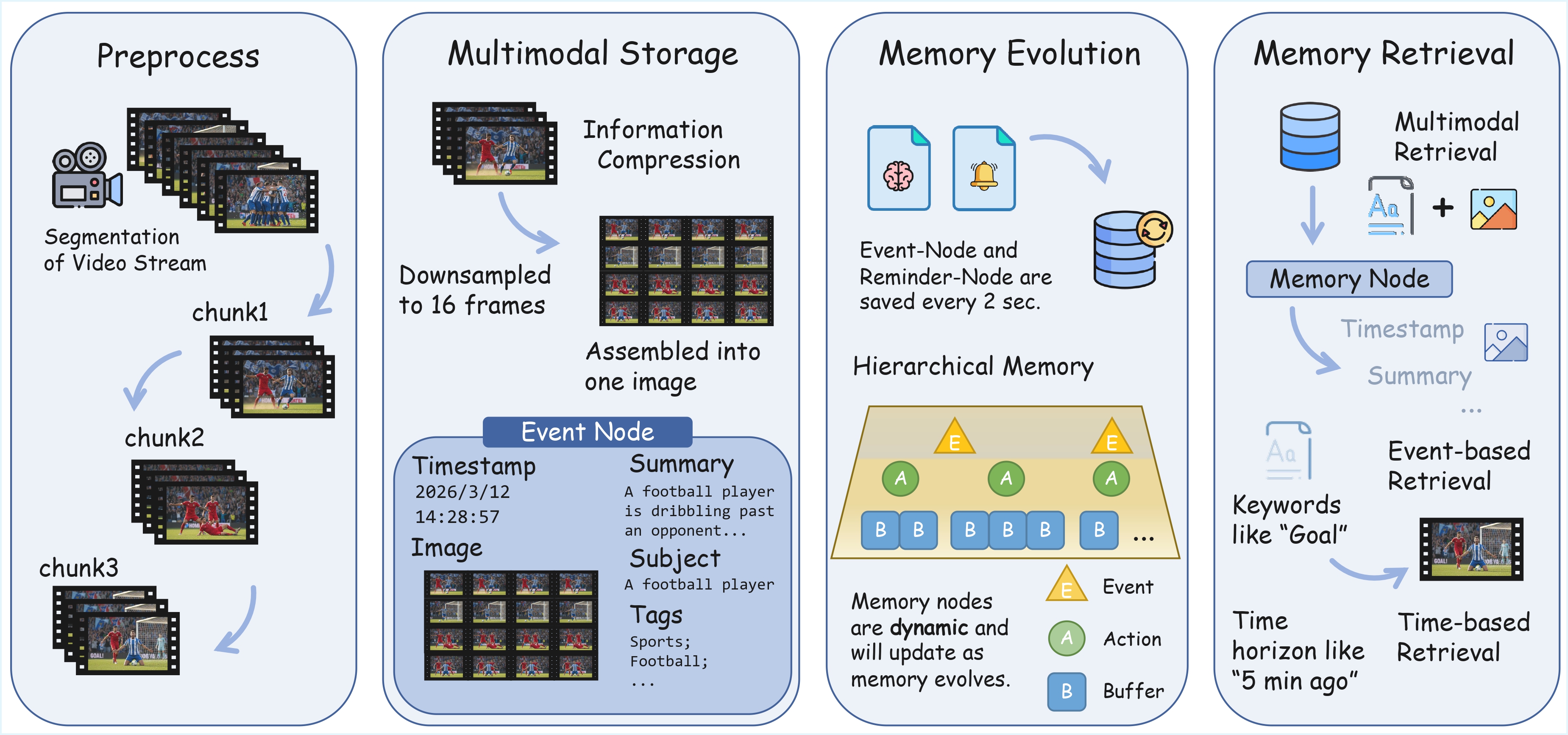
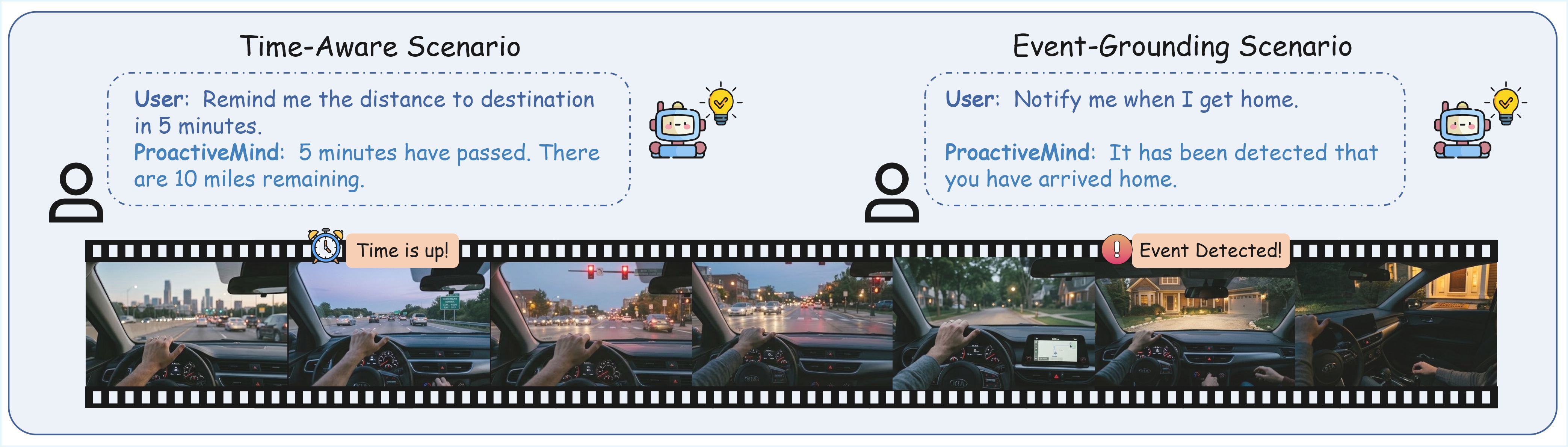
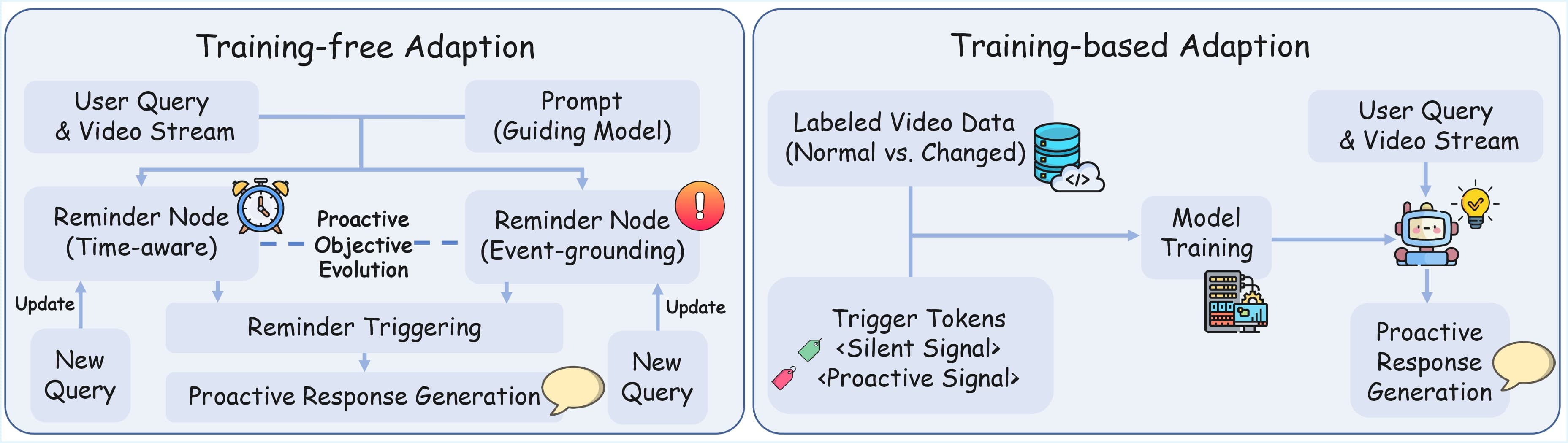
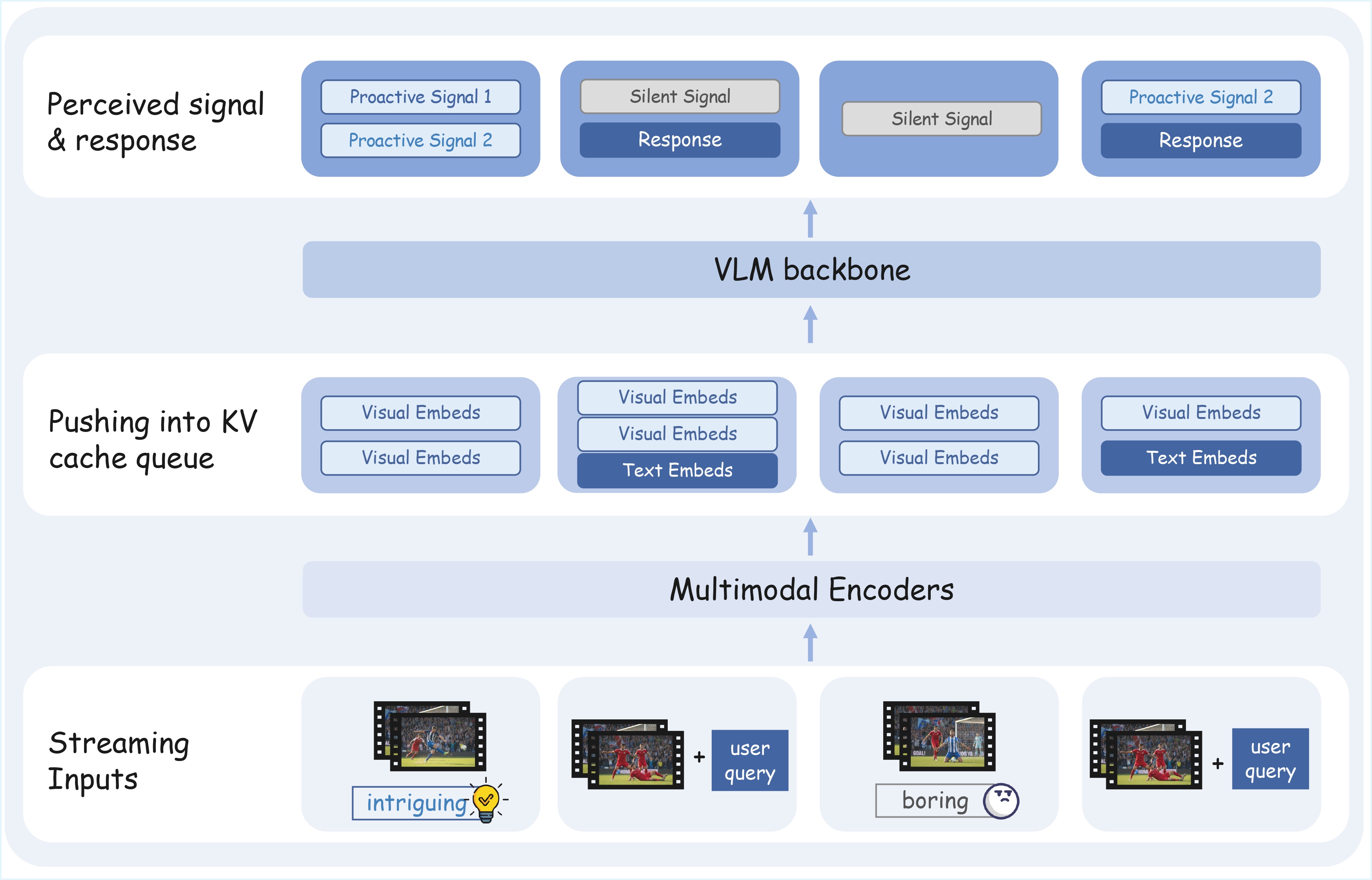
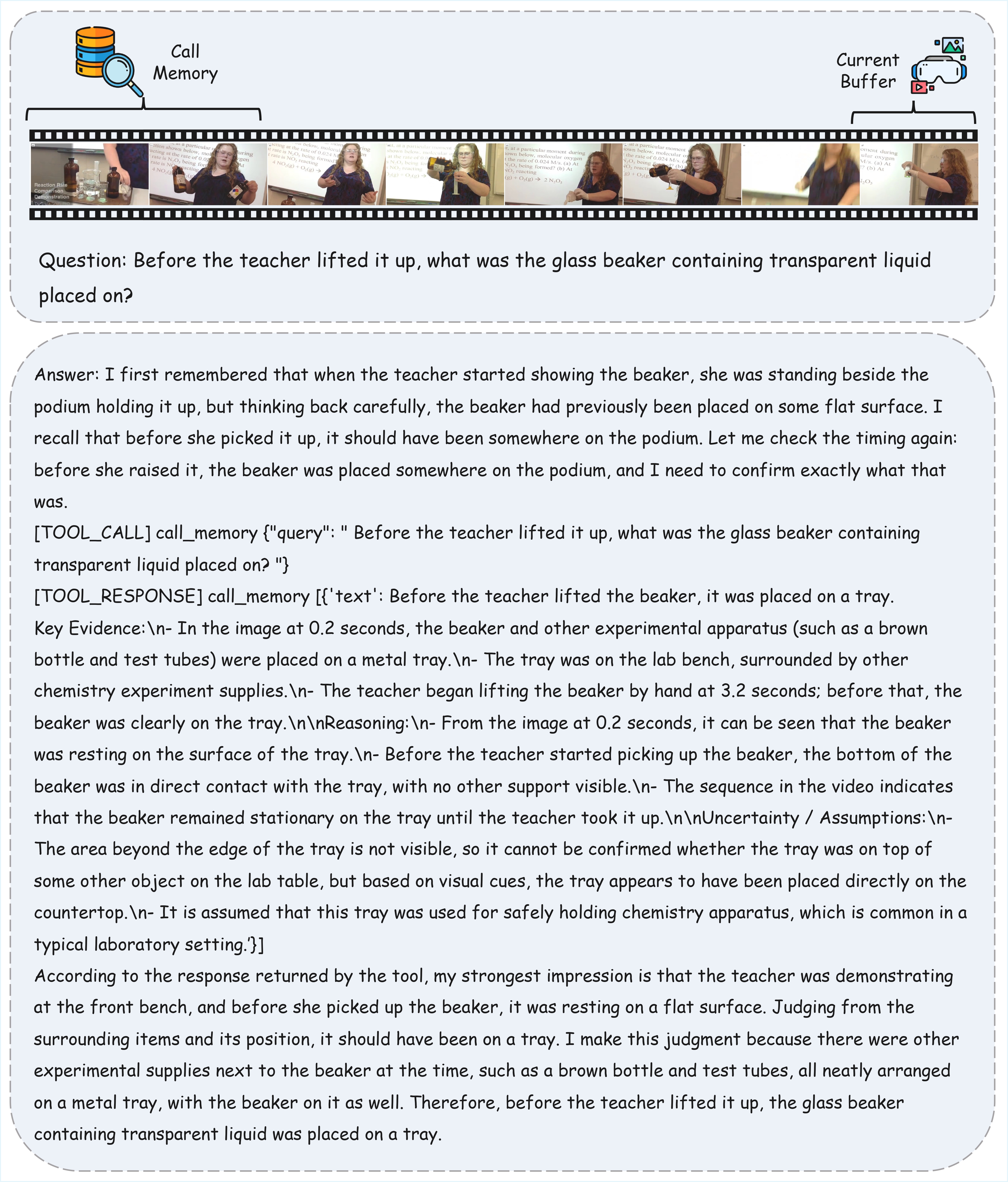
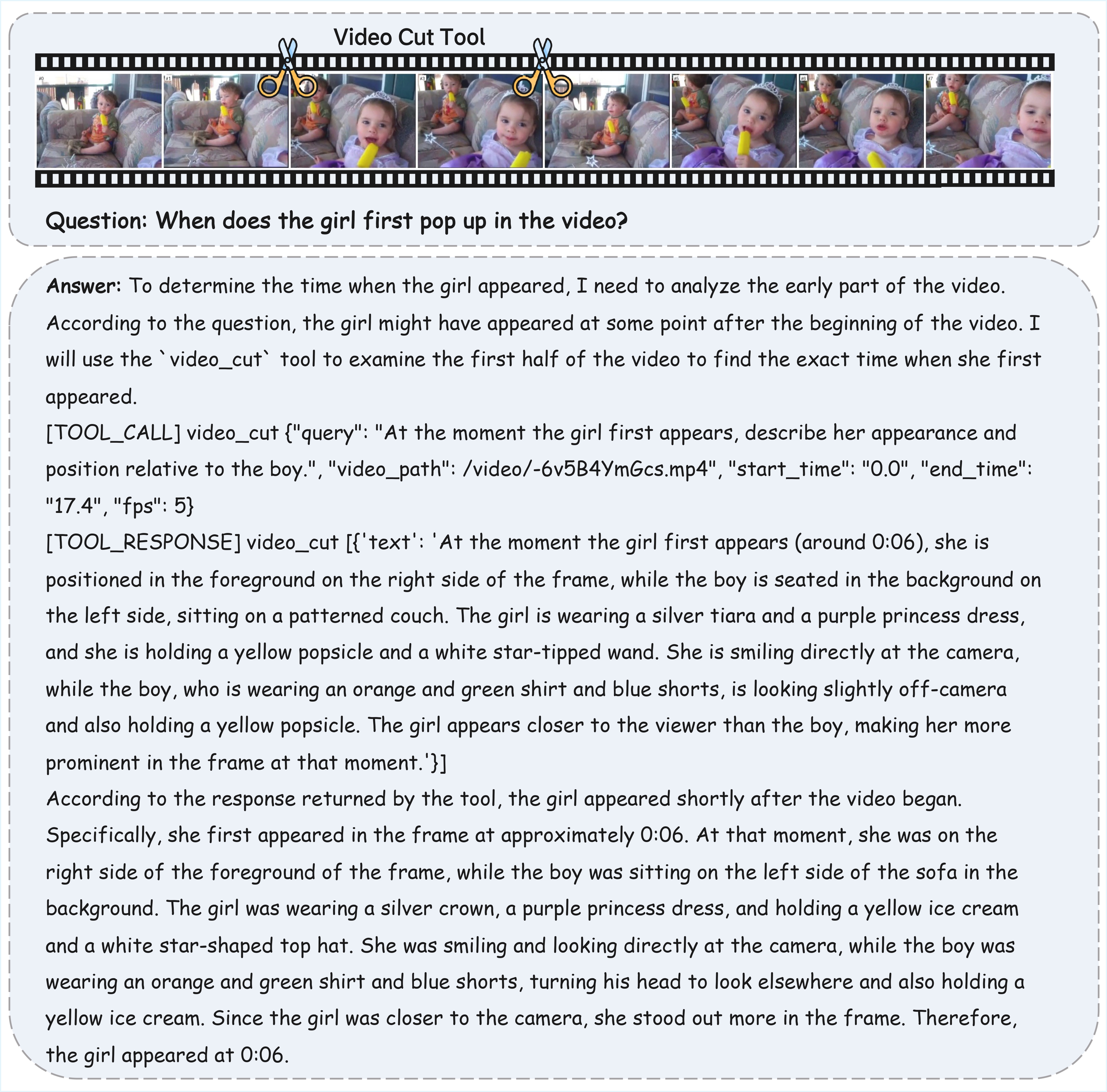
To alleviate these issues, we propose StreamingClaw, a unified agent framework for streaming video understanding and embodied intelligence. Beyond maintaining full compatibility with the OpenClaw framework, it natively supports real-time, multimodal streaming interactions. StreamingClaw integrates five core capabilities: (1) It supports real-time streaming reasoning. (2) It supports reasoning about future events and proactive interaction under the online evolution of interaction objectives. (3) It supports multimodal long-term memory storage, hierarchical memory evolution, efficient memory retrieval, and memory sharing across multiple agents. (4) It supports a closed loop of perception-decision-action. In addition to conventional tools and skills, it also provides streaming tools and action-centric skills tailored for real-world physical environments. (5) It is compatible with the OpenClaw framework, allowing it to leverage the resources and support of the open-source community. With these designs, StreamingClaw integrates online real-time reasoning, multimodal long-term memory, and proactive interaction within a unified framework. Moreover, by using scalable tools and skills to translate decisions into executable actions, it enables direct control of the physical world, supporting practical deployment of embodied interaction.
 Hugging Face